

2/18th Battalion (AIF) Association
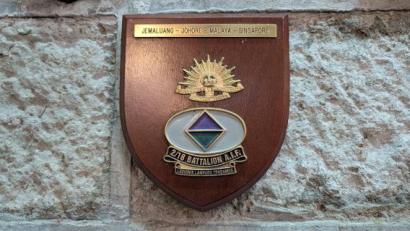
Battle Honours: Jemaluang · Johore · Malaya · Singapore
Welcome to the latest news from the association
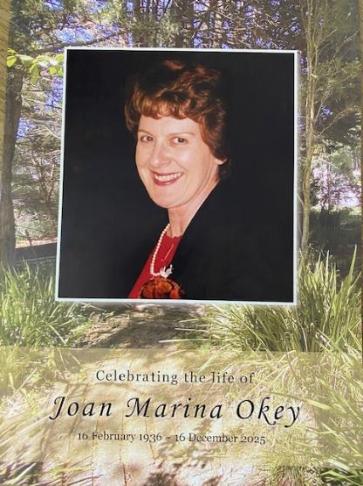
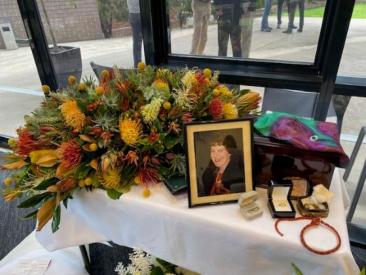
On a sad note, our Secretary, Joan Okey, passed away late last year. Several members of the association attended her Celebration of Life service where we learnt a lot more about her interesting life.
Joan’s talents included: gardening – she had a magnificent garden at her home in Katoomba, bushwalking and camping with the family, snow skiing in the winter at Guthega and swimming at the beach in summer, art classes, gifted pianist and lover of music, Probus Club office bearer and later was bestowed life member for her 25 years of service. Joan also dedicated many years of service to the “Varuna” Writer’s residence in Katoomba where she worked as Head Housekeeper. Most of all Joan was a devoted and loving mother and grandmother.
Joan was actively involved in helping many organisations throughout her lifetime including the 2/18th Battalion AIF Association which she dedicated to the memory of her father, Major Doug Okey. Joan was the backbone of the association, her dedication, kindness and tireless support will be remembered with great affection and gratitude. Her loss leaves a void that will be impossible to fill.
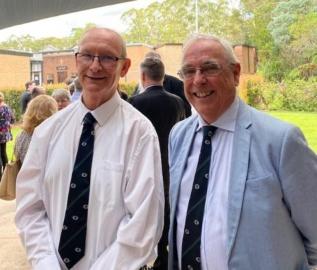
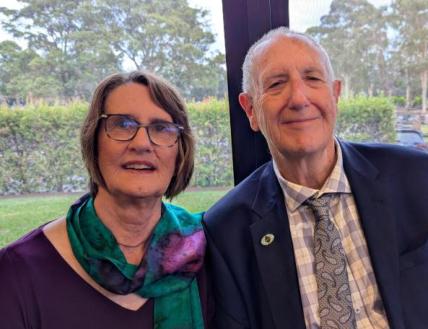
President, Evan Richard, was honoured to speak at the service on behalf of the association. You can read his speech below.
Welcome to the new look battalion newsletter. I now know what a fantastic job Joan Okey did of producing the newsletter for many years. If any members have photographs or stories for the newsletter, please email the Secretary, Liz Richard, at secretary@218battalion.org
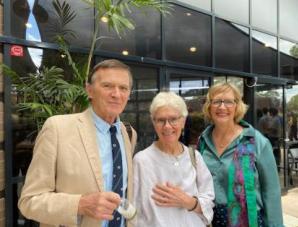
MEMORIAL SERVICE – JOAN MARINA OKEY
My name is Evan Richard and I am the President of the 2/18th (AIF) Infantry Battalion Association. The battalion was part of the 8th Division AIF and was in action from December 1941 to February 1942 in Malaya and Singapore Island, until the surrender on 15th February 1942. The surviving members of the battalion then became Prisoners of War for the next three and half years.
Joan’s father, Major Doug Okey, was an important and respected member of the battalion and as the Officer in Charge of the men on Blakang Mati Island (now known as Sentosa Island), was instrumental in keeping discipline and morale that saved many men’s lives.
When I was preparing this tribute to Joan, something I did not know was that Joan turned 6 on 16th February 1942, one day after the Fall of Singapore. What a terrible birthday this must have been, not having any idea whether her father was still alive and also whether she would ever see him again. She would not see him for another three and half years.
Joan spent a great deal of her life supporting the men of 2/18th with her diligent service that she gave to the Association for so many years. At the time of her passing she was the Secretary of the Association and had taken over as keeper of the archives which she lovingly looked after. Joan was always welcoming to new members of the association as someone mentioned on our Facebook page. She also produced the Battalion newsletter and organized the ANZAC Day and Christmas luncheons.
Joan received a request last year all the way from Denmark, from a relative of a battalion member. She was able to pass on some information and also send one of our History of 2/18th Infantry Battalion AIF books all the way to Denmark. Again another example of her diligence she took to her role with the Association.
Joan, assisted by Diane Humphries, the Association Treasurer, spent many hours digitizing our archives and only completed this task a few weeks before her death. These archives will now be available for future generations.
I will state that I am completely surprised that Joan would have turned 90 next month as she had so much energy and you would have thought that she many years younger.
I would like to quote Diane Humphries in her email sent to members on 30th December 2025 because I don’t think that I could improve on her words, “Joan was the backbone of the Battalion Association. Her dedication, kindness and tireless support will be remembered with great affection and gratitude. Her loss leaves a void that will be impossible to fill.”
Joan’s knowledge of the men and families of 2/18th was second to none. I am sure that her father would have been more than proud of her dedication to the Association, that was started in 1946 to support the men who were lucky to return, even though many were physically or emotionally injured. Joan enjoyed the company of the men who attended the famous “Picnics in the Park” get-togethers, which were held in Lane Cove Park. The Association, as there are no living members, is now to honour and remember all the men who served in the 2/18th Battalion.
Finally, I am a member of the Blyth Family, my father-in-law Merv Blyth was a past President of the Association. He always said that Joan was like another daughter, he felt so highly of her. We feel like we also have lost a member of our family.
On behalf of all members of the 2/18th AIF Infantry Battalion Association, we offer our sincere condolences to Joan’s family. She will not be forgotten and we feel better human beings for knowing Joan.
Last Post Ceremony Honours Lt Aubrey Harold Pringle NX35009
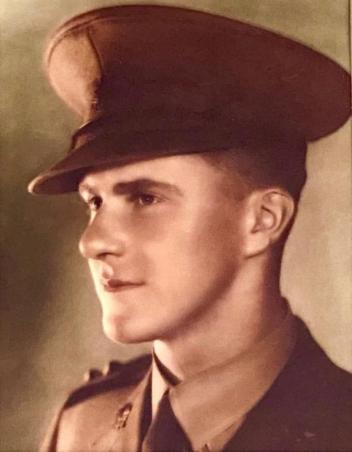
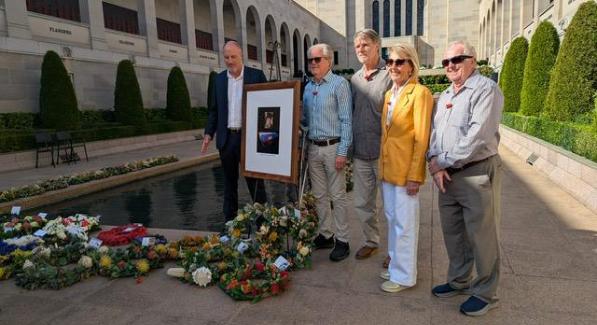
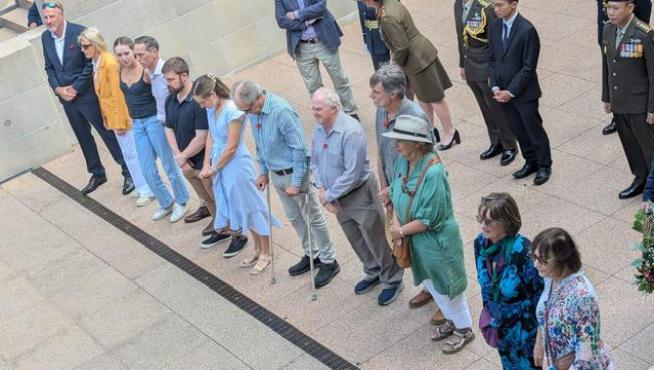
On 15th February 2026, on the anniversary of the Fall of Singapore, one of the men of the 2/18th Battalion AIF was honoured at the Last Post Ceremony at the Australian War Memorial in Canberra.
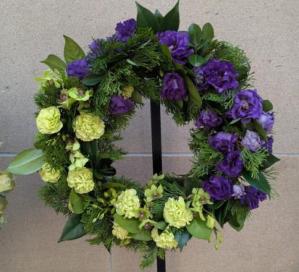
It was a very moving ceremony with many dignitaries, battalion associations, family members represented as well as the general public. A piper played while wreaths were laid by members of the battalion association, the Pringle and Noyce families, representatives of other battalion associations, the 8th Division, various military units and the representatives of the Singaporean and British governments. An air force squadron leader read the citation.
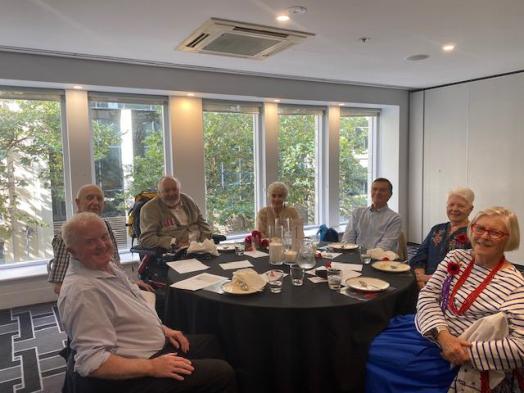
Afterwards several members of the association met up with members of the Pringle family for a meal and a chat. It was a chance to get to know each other and learn more about Jock’s life.
A transcript of the citation is below.
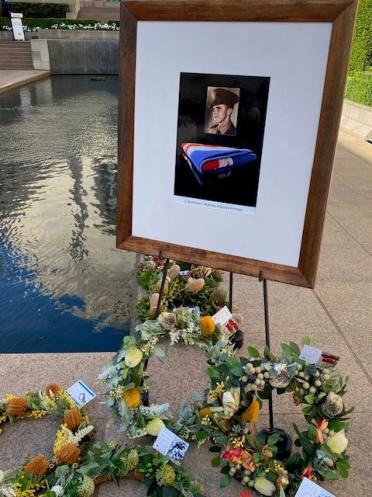
NX35009 Lieutenant Aubrey Harold Pringle 2/18th Australian Infantry Battalion
DOD 11 February 1942
Today we remember and pay tribute to Lieutenant Aubrey Harold Pringle. Aubrey Pringle was born in Narromine, New South Wales, on the 21st of November 1918. He was the second of eight children born to William and Phyllis Pringle. The Pringle family moved to Sydney when Aubrey was young, living first at Marrickville before building the family home, “Warrawidgee” in Kingsgrove. Aubrey’s father, Bill, was a shearing contractor, who travelled for work.
Aubrey grew up alongside his siblings, Alan, Betty, Wilbur, Donald, Jean, Ian and James. Known as “Jock”, he completed an economics degree, and while doing so, joined the Sydney University Regiment, where he reportedly became friends with the young Roden Cutler. Cutler, a Victoria Cross recipient, was later Governor of New South Wales and a member of the Knighthood.
Jock Pringle enlisted in the Second Australian Imperial Force on the 13th of July 1940. Granted a commission as lieutenant, he soon joined the 2/18th Battalion – part of the 22nd Brigade, which formed part of the Australian 8th Division. After basic training, and then a period of pre-embarkation leave in late December, Lieutenant Pringle and his men embarked on the converted cruise liner Queen Mary on the 3rd of February 1941. Before he left for Sydney, he asked his mother not to cut her hair while he was away. True to his wish, she never did.
Arriving in Singapore a fortnight later, Pringle and his comrades were stationed first at Port Dickson and then Mersing on the east coast of Malaya, where they trained in jungle warfare and helped build defences against any invasion of the peninsula. In late November, Pringle was placed on the seriously ill list, suffering from pneumonia. As he recovered in hospital in Singapore, the Japanese launched their invasion.
The 2/18th stood to arms on the 6th of December 1941 but it was not until the 3rd of January that it encountered its first Japanese – two downed airmen who were captured in a hut outside Mersing. Pringle returned to his unit in mid-January 1942, as the Japanese were advancing towards Singapore. On the 17th of January the battalion received orders to abandon their well-prepared defences at Mersing and withdraw south to Jemaluang.
Japanese successes to the west were threatening to outflank the forces on the east coast. Although never tested, strong defences had dissuaded the Japanese from making a landing around Mersing and using the shortest landward route to advance on Singapore. The 2/18th’s first major action was at Nithsdale Estate in the early hours of the 27th of January. The battalion lay in wait for the advancing Japanese and sprang an ambush that inflicted heavy casualties. The men then withdrew to Singapore, where they were allocated a position in the centre of the 22nd Brigade’s sector on the island’s east coast. The wide frontage the brigade was required to cover, however, meant its platoons and sections had to be widely dispersed.
When the Japanese launched their invasion on the night of the 8th of February, the battalion had no hope of holding them back, and was broken up during the confusion of the relentless Japanese advance. Pringle became a senior member of X Battalion, a combined force of depleted companies and Indian reinforcements, before being captured on the 11th of February, along with Private Ted Brown of the 2/20th Battalion.
Brown later reported that, after he and Jock Pringle had been captured, the area was hit by heavy mortar and shell-fire, causing the death of two Japanese. Brown believed that two captured Australian officers were also killed by this fire while they were being questioned.
In 1946, Jock Pringle’s remains were found in a shallow grave near a foot track on the slope of a hill. He had been buried beside Lieutenant William Richardson. He and Pringle had been mates, having enlisted on the same day. Jock Pringle was 23 years old.
As Singapore was surrendered to the Japanese four days later, Jock Pringle was spared the suffering of those who became prisoners of war of the Japanese. This would have been cold comfort for his family, who placed ‘in memoriam’ notices in the newspapers for years after his death. Today, Jock Pringle’s remains lie buried in Kranji War Cemetery in Singapore, under the inscription chosen by his grieving family: “Duty nobly done.”
His name is listed on the Roll of Honour on my left, among almost 40,000 Australians who died while serving in the Second World War. This is but one of the many stories of service and sacrifice told here at the Australian War Memorial. We now remember Lieutenant Aubrey Harold Pringle, who gave his life for us, for our freedoms, and in the hope of a better world.
Duncan Beard
Editor, Military History Section
Australian War Memorial
THE DISCOVERY OF JOCK PRINGLE’S UNIFORM – EMAIL FROM LYNETTE SILVER
This may interest you.
I am going to write this up and put it on my website, under ‘investigations’.
You will remember that I recently revisited old research for Neil Moon, as the family thought Jock Pringle was beheaded by the Japanese, after his sister jumped to conclusions.
I had done all this back in 2004, but the new generation had come up with the old story.
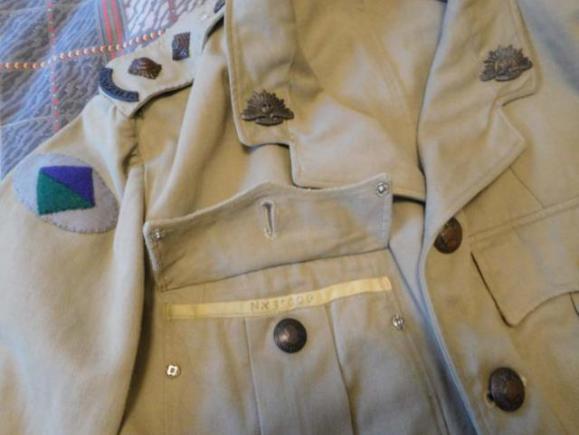
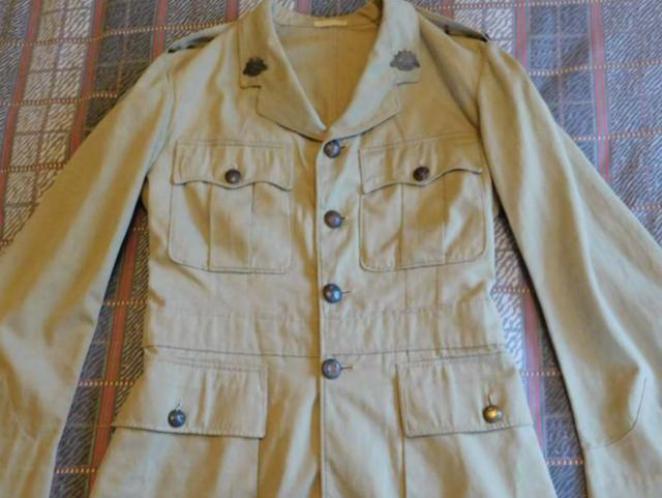
As a result of internet chat sites, a new fact recently emerged. Pringle’s tunic had been bought by an Aussie in 2017 at a market in Japan. Fantastic condition, complete with shoulder pips, badges, colour patch and his service number, very legible under the flap of the right pocket.
So how did a pristine tunic of a soldier killed in Singapore get to Japan, the family wanted to know?
Michael Noyce, nephew of Jock’s girlfriend Kath Neuss (killed on Bangka Island) met up with the Moons last week, after I introduced them via email. Had Jock and Kath survived they would have married. I was supposed to go, but jiggered my back and was at the doctor.
They told Michael about the jacket and he suggested they ask me.
Easy.
Clothing of those in action was collected from AIF store and taken to Changi after surrender. Any surplus clothing (belonging to deceased personnel or not needed) was up for grabs for those without anything other than what they were wearing. Clothing also sent by Japs to places where POWs were working, for distribution.
Consequently, clothing belonging to a soldier else ended up in places he had never been to. War graves parties recovering bodies in Borneo discovered this! So, either:
An Australian lieutenant in need of a tunic took it, was transferred to Japan and, as the tunic was festooned with badges etc and in excellent condition, swapped or sold it for food, money, medicine etc to a Japanese guard, soldier, who kept it as a souvenir.
Or
Like a lot of clothing at Sandakan, it didn’t reach the POWs. Some sent to Sandakan was appropriated by the Japanese and given to local workers at the airfield to wear at the big opening ceremony (the POWs were ragged, while the locals looked very spiffy in our stuff, looted from the AIF delivery). So some Japanese could have simply helped himself to a tunic that was worth souveniring, from a bundle intended for POWs. Mystery solved. Pics of tunic below.
Lynette
ANZAC DAY 2026
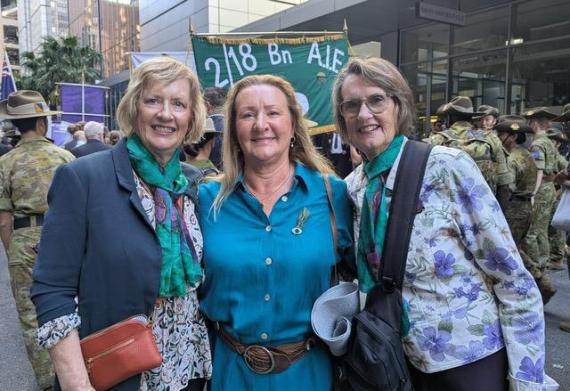
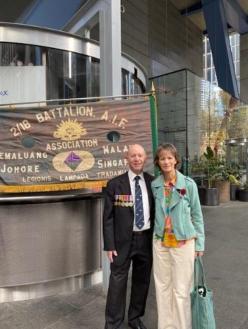
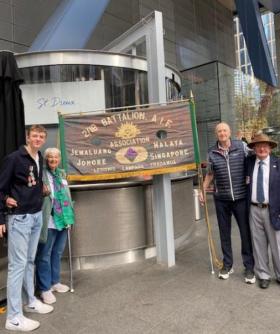
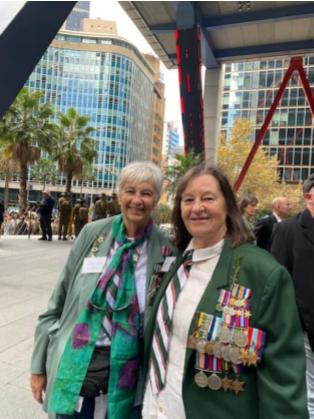
It was a glorious day in Sydney for the annual ANZAC Day march. We had a good roll up of family members marching behind the battalion banner. They were representing their fathers, grandfathers and other relatives of the 2/18th Battalion who bravely fought for our country.
A special thank you to the cadets of Hurlstone Agricultural High School who carried the banner along with Matthew who has proudly represented his family in honour of his grandfather.
It was great to have the support of the enthusiastic crowd lining the streets. Rick had to “jump the fence” so as to speak so he could join our group of marchers along the route.
Afterwards we enjoyed a nice lunch at the club and were enlightened by Stewart’s talk about the Mersing Cross.
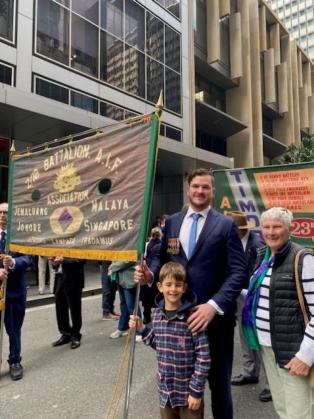
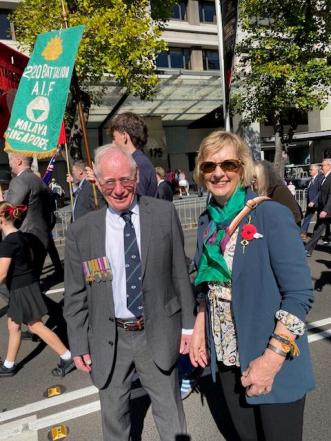
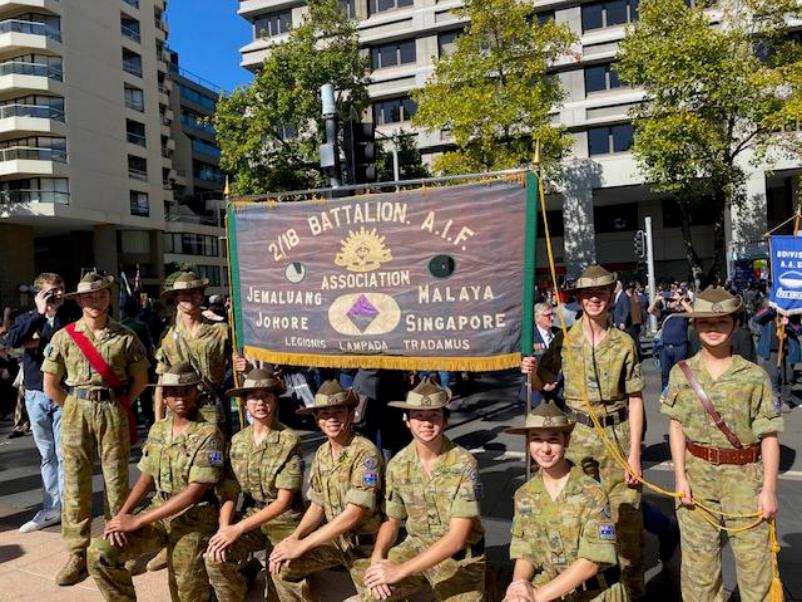
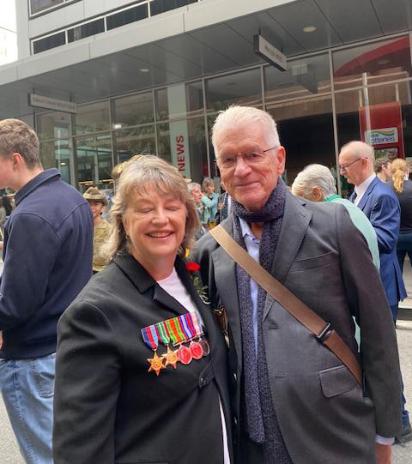
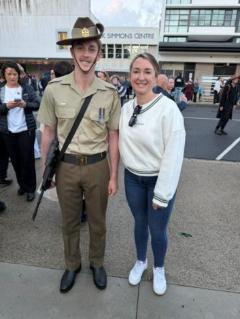
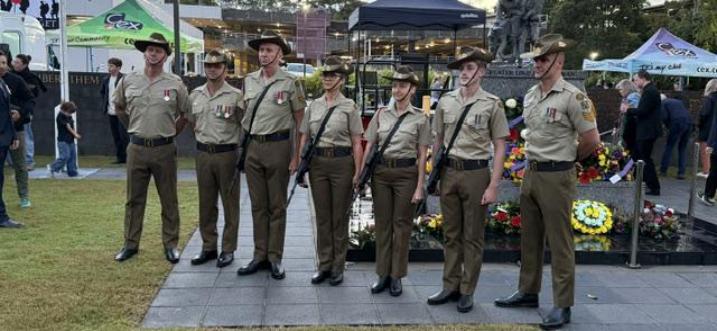
Mervyn Blyth’s great grandson Levi, who is in the army reserve, was a member of the catafalque party at the ANZAC Day service in Coffs Harbour.
Stewart McLennan’s talk about the Mersing Cross
The Mersing Cross is a World War II battlefield memorial. It is directly associated with the 2/18th Battalion of the Second Australian Imperial Force (AIF). Commemorating the Australian soldiers who fought and died during the Malayan Campaign in early 1942, particularly around the Mersing–Jemaluang area in Johor, eastern Malaya. (Modern Malaysia).
Historical Background
The 2/18th Battalion was raised in Australia in 1940 and deployed to Malaya in 1941 as part of the Allied defence 8th Division, against possible Japanese expansion. The Battalion spent a year acclimatising to the tropical conditions of their new surroundings while conducting mock battle exercises in the surrounding jungle and nearby rubber trees.
Towards the end of 1941, the Battalion was ordered to move to Jahore in Eastern Malaya, specifically to make preparations for an ambush of Japanese forces transitioning along the East Coast Road towards the island of Singapore, amongst the rubber trees growing estates of Mersing and Jemaluang.
In an airletter I treasure, on 3/01/1942, my father John wrote to Mrs Jean Rothplaatz, the wife of the owner Bob, of the farm he used to manage near Inverell, saying in part: Dear Jean, Happy New Year I can hear you say: “Is it?” It may be yet – here’s hoping. He had just days to wait for his sense of foreboding to become a stark reality.
In mid January 1942, during the Malayan Campaign, the 2/18th Battalion was heavily involved in fighting near Mersing. One of its most significant actions occurred along the Mersing–Jemaluang road, where Australian forces ambushed advancing Japanese troops in a fierce engagement lasting many hours.
Widely accepted to be the fiercest hand to hand conflicts Australian soldiers were engaged in during WWII.
vwma.org.au
Despite local successes, Allied forces of the 2/18th Division were ultimately ordered to retreat toward Singapore. Many members of the battalion were later killed, captured, or died of diseases, malnutrition or brutality as prisoners of war (POWs), following the fall of Singapore in February 1942.
Construction of the Mersing Cross
The Mersing Cross was constructed shortly after the fighting in 1942, by a party connected with the 2/18th Battalion. For men untrained in demining it was highly dangerous work. One of them died when a mine exploded and several were injured there. The cross was built by newly promoted Lieutenant Charles Wagner (please find more about him following) and the demining party. The Japanese had forced the group to return to the Mersing area after the fighting. One of them was my father Sergeant John “Jack” McLennan
monumentaustralia.org
The memorial was handmade from wooden planks they found there. Reflecting the improvised conditions there. Its inscription was carved with a knife and filled with tar taken from the road.
Purpose and Meaning
The Mersing Cross was erected to: Honour soldiers of the 2/18th Battalion who were killed in action or died during the campaign. And to mark the site of heavy fighting, particularly near the Nithsdale Estate and Jemaluang. The cross provided a simple battlefield grave marker and memorial in a remote jungle environment
Like other battlefield crosses (e.g., the later Long Tan Cross built and erected by fellow Australian soldiers on August 18/1069 South Vietnam), it represents a deeply personal and immediate form of commemoration, created by soldiers themselves rather than by governments.
Physical Description
Originally a simple wooden cross, roughly constructed using available materials. Inscription hand-carved and filled with tar: “To fallen comrades”. Located beside the road where the battle occurred.
Over time, the original cross has been preserved and commemorated in association with the battalion’s legacy.
Significance
The Mersing Cross is important because it:
Symbolises the sacrifice of Australian troops in Malaya, a campaign often overshadowed by later Pacific battles.
Represents mateship and battlefield remembrance, as it was created by soldiers themselves. From my personal perspective, it's likely our father, Jack, might have been involved in making it.
Given his skills as a “bush carpenter" evidenced by some of the timber items he made before he died at his own accord due to PTSD in 1952.
The cross marks one of the few successful Australian actions in the Malayan Campaign, despite the overall defeat.
It also reflects the tragic fate of many 2/18th Battalion soldiers, a large number of whom became prisoners of war, with many dying in captivity.
Conclusion
The Mersing Cross stands as a powerful and personal memorial to the men of the 2/18th Battalion AIF. Constructed in 1942 by fellow servicemen after the fighting, it commemorates those who died during the desperate battles around Mersing and Jemaluang. Its simple construction and battlefield origins make it a poignant symbol of remembrance, sacrifice, and the enduring bonds between soldiers.
Current location
754 Pacific Highway, St John the Evangelist Anglican Church, Gordon, 2072 NSW
Who was Lieutenant Charles Wagner, the soldier who led the group?
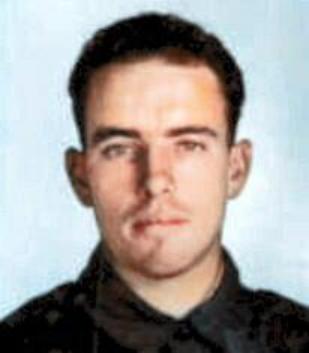
Lieutenant Charles Arthur “Charlie” Wagner was an Australian army officer born in Bondi in 1916, with a First Nations Australian father.
Before the war he worked as a labourer in a boot factory who was active in the Scouts (earning the King’s Scout award), and served in the Militia with a focus on intelligence.
He enlisted in the Australian Imperial Force in 1940 and joined the 2nd/18th Battalion, later becoming its intelligence sergeant. During fighting in Malaya in early 1942, he showed notable bravery by moving through enemy lines to gather crucial information, enabling accurate artillery strikes.
For this, he was awarded the Distinguished Conduct Medal and commissioned as a lieutenant.
After the fall of Singapore, Wagner became a prisoner of war. He led the group who were forced to conduct the demining but escaped in 1943 while being transported to Borneo. He and a small group reached the Philippines, where they joined local guerrilla forces and fought against the Japanese. Wagner led daring operations, including an ambush on a Japanese vessel.
In December 1943, while helping defend against a Japanese attack on Mindanao, he was killed by a sniper. He was later reburied in Sai Wan War Cemetery in Hong Kong and posthumously mentioned in dispatches.
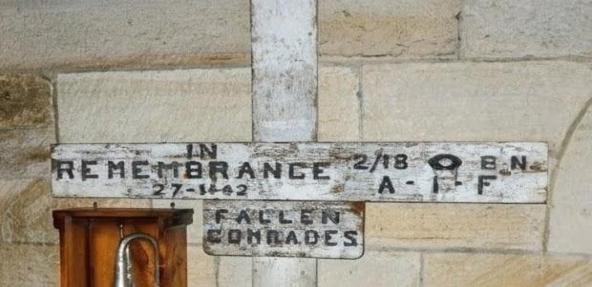
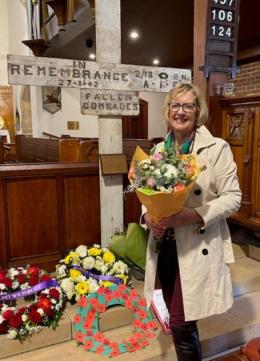
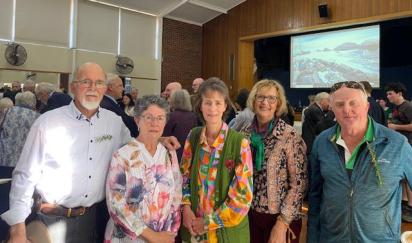
ANZAC Day church service – St John’s Gordon
The association was represented at the ANZAC Day church service. Flowers were laid at the foot of the Mersing Cross and President Evan Richard read the Commemoration which included the Ode.
A short film was played in the hall afterwards during the morning tea. It was of the 1961 march from the war memorial at the council chambers along the Pacific Highway to the church.
CHANGI PIANO
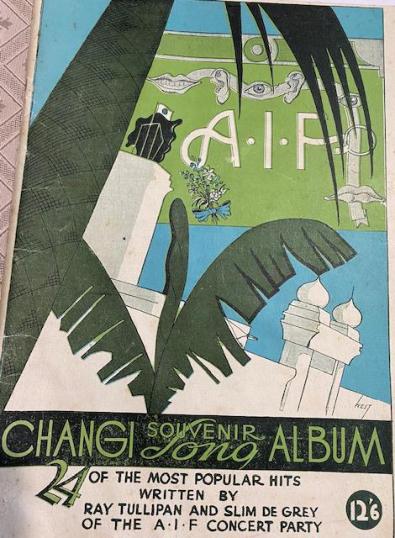
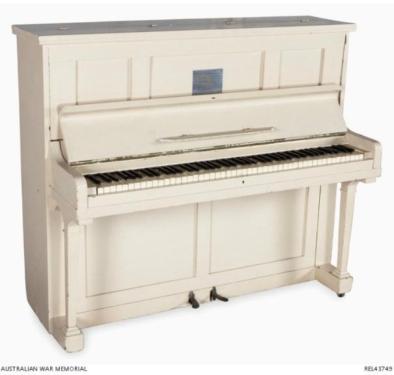
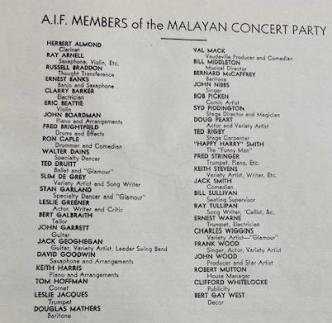
The work of the concert parties, which performed in Changi, Borneo, Thailand, Ambon and just about anywhere that men and women needed to be entertained, was a critical factor in maintaining morale. As Sid Marshall, President of the NSW Branch of the ex POW Association said of the concerts. “It was the only time that I felt that I wasn’t there. It rekindled my memories of home and made me want to go back. You see it was all we had.”
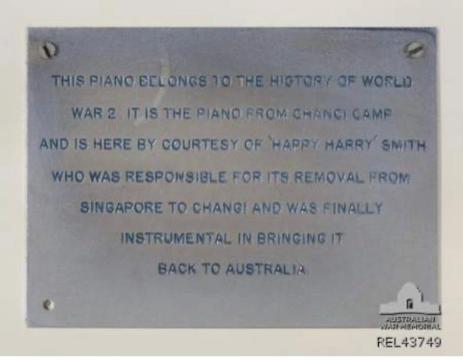
One night a group of POWs snuck out and dragged the piano, which was located at the British Naval Base, back through the bush and over the wire into the camp. John “Jack“ Boardman was a pianist and member of the Changi concert party. Also among the concert party was variety artist Slim De Grey.
After the war the Changi piano was brought back to Australia by the concert party leader, “Happy” Harry Smith. It has since been restored by the Australian War Memorial and was played by Jack Boardman at a special concert. The song he played was called “Barbara” and dedicated to his wife whom he married before he went off to war. It was the only song he composed while he was in Changi. A story of the Changi Piano can be viewed on the following link. Watch the story of the Changi Piano
An interesting connection with this story is that Jack’s great-grandson Max, was a contestant on the latest series of the ABC show “The Piano” and the piece he played…. “Barbara”!
“SPIRIT OF BORNEO CHALLENGE” TREK
I have just returned from a 14 day 'Spirit of Borneo Challenge' trek in Sabah.
For nearly three decades tour operator Tham Yau Kong of TYK Treks has worked closely with renowned historian Lynette Silver to retrace the route of the Death Marches and develop tours to preserve and share Sandakan stories. Tham and his team are Sabah's premier jungle trekking specialists and Lynette is the authority on the history of Sandakan and the infamous Death Marches.
The first camp at Sandakan was for the purpose of building a military airstrip in July 1942 and by 1943 there were over 1800 Australians and 750 British that had arrived from Singapore in the camp.
Rations diminished and conditions deteriorated rapidly from 1943 onwards with increasingly malicious and erratic behaviour inflicted by the Japanese and Formosan guards. Death rates climbed.
By 1945 the Japanese command feared that the Allies would invade East Borneo. Consequently, more than 1000 surviving prisoners were moved in a series of futile marches 265kms to Ranau in the west.
The 290 severely weakened and sick prisoners left behind in the camp all perished.
Our chief guide on the trek was Kim, Tham's son. Tham, who is now in his 70s, lived in one of the remote villages on the Death March Route and remembers stories of his older cousin secretly giving food to sustain the starving prisoners at great risk to her and that of her family.
TYK Treks and Lynette Silver have been recognised for their commitment and dedication in the identification of the Death March Route.
Lynette has worked collaboratively to bring to light the stories of those who wearily trod the path and in doing so has honoured their memory and that of Sabah's historical contribution to this tragic chapter of the war.
The first four days of the trip included visits to significant sites to give us an insight into their part in the Sandakan story.
We visited the Church of St Michael and all Angels. On July 7, 1942, nearly 1500 Australian and British POWs departed from Changi in Singapore on the Yubi Maru, suffering appalling conditions. After disembarking in Sandakan many of the soldiers were marched to the town padang, an open field on the outskirts of the town and then to St Michaels where they spent their first night in the protection of this beautiful stone building before leaving for Mile 8 Camp. For many, their final place in captivity.
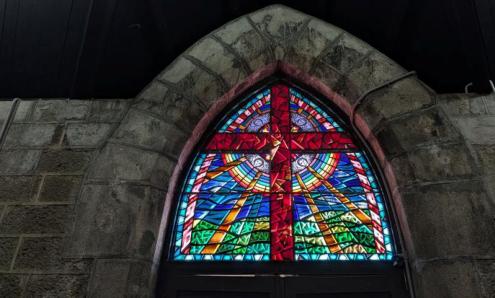
In the church, the Windows of Remembrance and Friendship Windows by Phillip Handel are magnificent and commemorate the strong bond formed between both the Australian and British prisoners and the people of Sandakan forged by hardship at this time.
Lynette took time to impart the heartwarming story of the creation of the windows and the legacy of Phillip's expertise and dedication.
A walking tour of Sandakan POW Memorial Park was truly edifying. Soldiers were held there from mid-1942 to 1945, the majority leaving on the Death Marches from May to June 1945.
We also visited the Labuk Bay Proboscis Monkey Sanctuary and the Rainforest Conservation Centre which includes the Bornean Sun Bear Conservation Centre and Sepilok Orangutan Rehabilitation Centre. Dedicated staff and volunteers are committed to preserving these endangered Bornean animal species.
A canopy walk was then undertaken as a warm up for the trek.
On Wednesday 19th August we headed over 100 kilometres by bus from Sandakan to Boto to start the trek staying at Institut Perhutanan Sabah – Telupid Forest Resthouse and Sabah Tea Plantation.
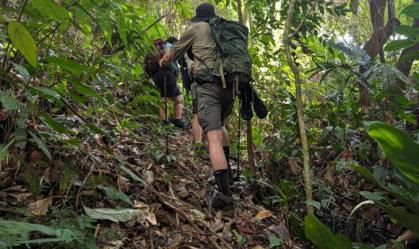
Over five days we climbed and descended hundreds of metres each day in very hot and humid conditions.
The jungle experience was both strenuous, exhausting and exhilarating.
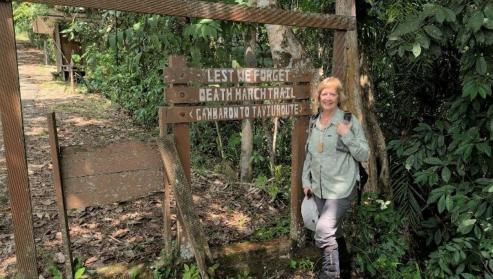
We all felt a certain camaraderie, climbing up what seemed to be endless ascents, crossing dubious swing bridges, walking upstream for 40 minutes in the Tampias River, traversing steep ridges and gullies, navigating fallen trees, tree roots, vines, and very thick scrub. This gave us a small taste of the conditions the soldiers faced building their camaraderie and mateship. No doubt these elements kept the column of soldiers persisting under insufferable conditions.
Each of us followed the path of a POW who we honoured where possible at the particular site where they died. We also participated in services of commemoration at Kundasung War Memorial, Quailey’s Hill and Labuan War Cemetery.
Close to the end of our trek we stopped at Ranau airstrip where four of the six survivors were rescued.
We finished our trek at The Last Camp, the final prisoner-of-war compound. It is now a memorial and place of contemplation, close to the beautiful Liwagu River. The group all spent time in this serene setting reflecting on our experience and that of the soldiers that we were honouring.
The tour was memorable and a sombre insight into the Sandakan story.
Alison Job – (daughter of Merv Blyth, 2/18th Battalion AIF)
August 2026
Noticeboard
Christmas luncheon
You are all invited to celebrate Christmas and get together with other members of the Association.
Date: Monday 7th December 2026
Time: 12.00pm
Venue: Chatswood RSL, 446 Victoria Ave, Chatswood NSW (located close to the Railway and Metro with lifts available)
RSVP: reply by email to secretary@218battalion.org by 23/11/26
New contact details
Our new website is: 218battalion.org
Our new email address is: secretary@218battalion.org
Follow us on Facebook at: 2/18th Battalion AIF Association
Due to rising costs of printing and postage and also the loss of some mailing addresses, we will no longer be mailing out hard copies of our newsletter.
2027 dates for your calendar
15th February 2027: Fall of Singapore Day
25th April 2027: ANZAC Day March and Luncheon – details to follow
6th December 2027: Christmas luncheon, Chatswood RSL

